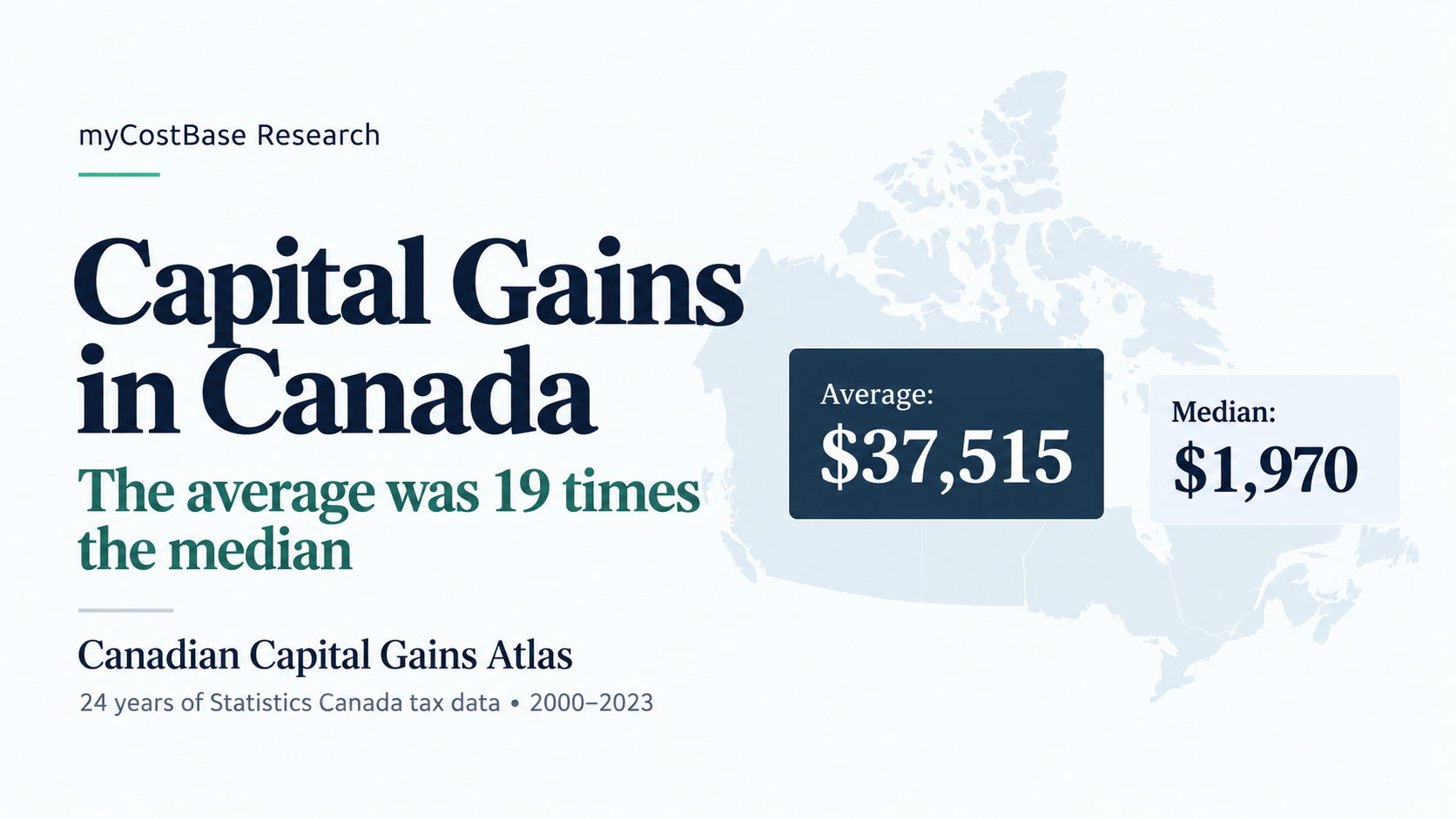
Capital Gains in Canada: The Average Was 19 Times the Median
What 24 years of Statistics Canada data reveal about reported capital gains, average and median gains, income groups, and provinces.
myCostBase Research
15 min read
Practical Canadian guides to ACB records, ETF adjustments, and capital gains reporting.
What 24 years of Statistics Canada data reveal about reported capital gains, average and median gains, income groups, and provinces.
How Canadian tax reporting works for listed calls and puts, including grant-year premium, closing trades, exercise, assignment, expiry, and cross-year adjustments.
A practical monthly and year-end recordkeeping routine for Canadian investors tracking purchases, DRIPs, ETF adjustments, transfers, FX, and T5008 slips.
Phantom distributions are taxable income from ETFs that were never paid out in cash. They increase your adjusted cost base and are often missed by broker book value records.
If you held more than $100,000 in specified foreign property at any point during the year, you must file T1135. Here is exactly what counts, what does not, and how to report it correctly.
Learn how to find and document Bank of Canada exchange rates for foreign-currency investments, including settlement dates, missing observations, and T5008 checks.
Download a five-sheet Excel ACB workbook and learn how to record purchases, DRIPs, sales, and cost adjustments across taxable brokerages.
Understand adjusted cost base in Canada, distinguish total ACB from ACB per share, and follow worked calculations for purchases, partial sales, ETFs, and USD trades.
Broker book value can be a useful cross-check, but it may not reflect your complete adjusted cost base. Learn when it is useful, why differences arise, and how to reconcile them.
Build a record you can understand before tax season. These guides explain the investment events behind adjusted cost base, with worked examples and links to tools you can use while checking your own transactions. Start with the question that matches your records, then follow the related guide for the next step.
If you are new to the subject, read how to calculate adjusted cost base . It covers purchases, commissions, partial sales, and the difference between total cost and cost per share. Investors using more than one taxable brokerage can continue with pooled ACB across brokerages .
For ETF holdings, return of capital and ACB explains why cash distributions can change the cost you carry forward. For U.S. securities, the Bank of Canada exchange-rate guide shows how to document Canadian-dollar conversions. At filing time, use the T5008 Box 20 guide to investigate differences between a slip and your ledger.
Keep the original confirmations and distribution records with every calculation. The examples explain a method; your ownership, account type, transaction history, and supporting documents determine how it applies to you. Complex or incomplete histories may need professional review.
Ready to check a scenario? Open the free investor tools , or use the Canadian ACB checklist to organize a complete pre-filing review.